
By Samwel Doe Ouma
In Kilifi Kenya, a selected number of Shigella Human Infection study volunteers arrive healthy. They are screened, tested and cleared. Then, under strict medical supervision, researchers deliberately infect them with Shigella, a bacterium that causes severe diarrhoea.
It sounds alarming. Scientists say it is one of the fastest ways to develop vaccines for deadly diseases.
The tightly controlled process known as a human infection study (HIS) — is being used in Kilifi to accelerate the development of a Shigella vaccine. Participants in the ongoing study are admitted for 14 days of round-the-clock monitoring. Researchers track symptoms, collect laboratory samples and begin treatment promptly once clinical signs appear.
“Human infection studies involve the deliberate infection of healthy adult volunteers with a pathogen,” said Joyce Shikuku, project manager for human infection studies at the KEMRI-Wellcome Trust Research Programme. “We screen you thoroughly, confirm you are healthy, infect you in a controlled setting, and then monitor you very closely.”
A race for a Shigella vaccine
Diarrhoea caused by Shigella remains a major public health threat, particularly in sub-Saharan Africa. The infection is a leading cause of childhood illness and death in parts of coastal Kenya. Yet no licensed Shigella vaccine is in routine use globally.
Human infection studies allow researchers to safely evaluate vaccine candidates, immune responses and other factors that influence susceptibility or resistance to disease. The approach is especially valuable in endemic settings, where prior exposure and immunity vary widely.
By observing how healthy adults respond to controlled infection, scientists can test whether candidate vaccines or drug regimens are effective before advancing to larger, more costly trials.
“The main objective is vaccine development,” Shikuku said. “We test whether what we have is efficacious and can achieve the study endpoints. Once we confirm safety and efficacy, we move to dose-finding and larger trials.”
Addressing fear and mistrust
Recruiting healthy volunteers for deliberate infection requires intensive community engagement, she explains.
“When you tell someone, ‘We will infect you,’ the first reaction is fear,” Shikuku said. “People ask, ‘What if I die?’”
She emphasize that such studies are conducted only for diseases with established treatments. Participants are treated as soon as symptoms develop and are discharged only after full recovery.
According to Shikuku, the programme has conducted human infection studies for more than a decade without any participant deaths or severe complications linked to the research. Volunteers remain under medical follow-up for up to 18 months after discharge, with care provided even for unrelated illnesses during that period.
Human infection studies undergo multiple layers of ethical and regulatory review before approval. Protocols must be cleared by institutional ethics committees and national regulatory authorities.
Shikuku said community input is sought even before protocols are submitted.
“We seek community views early,” she said. “If they say the study would not be acceptable in this context, we revise it. Their input is incorporated before we go to regulators.”
Emergency systems — including resuscitation facilities and ambulances — are on standby in case of severe adverse events, though none have required escalation so far.
Local science, global impact
Shikuku says that the programme began conducting human infection studies in Nairobi in 2013 and later expanded to Kilifi, recruiting volunteers from the local demographic surveillance area.
Researchers say generating evidence in African populations is critical for diseases that disproportionately affect the continent.
In Kilifi, where Shigella contributes significantly to childhood hospitalizations and deaths, a successful vaccine could dramatically reduce mortality among young children.
For volunteers, participation ultimately rests on trust in the science and in the safeguards.
“Everything we do is about safety,” Shikuku said. “But it is also about finding solutions that will save lives especially for children.”
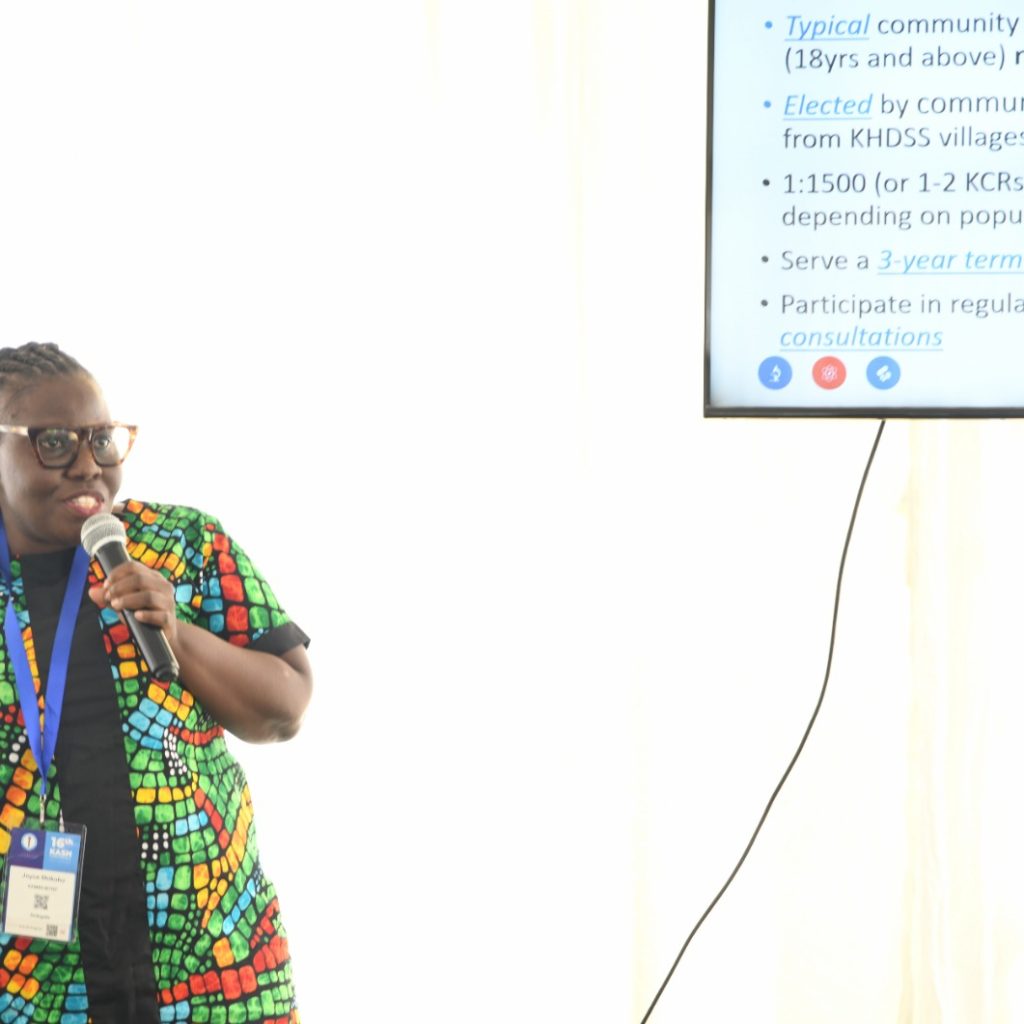
Shikuku presented on human infection studies in a low- and middle-income country context at the 16th KASH Conference, highlighting lessons from community and public engagement in the Shigella study.
She emphasized inclusive consultation, clear messaging, sustained dialogue and proactive media engagement as key to countering misinformation and building public trust in ethically sensitive research.