
By Koech Gilbert
Kenya is moving towards the global goal of protecting its citizens from hazardous weather, water, or climate events through life-saving early warning systems.
Early Warnings for all was launched by the UN Secretary-General, António Guterres, IN 2022.
The initiative seeks to ensure that everyone on earth is protected through life-saving early warning systems by the end of 2027.
Keen to protect its citizens from the increasing frequency and magnitude of extreme climate events, the government has moved in to address the gaps hindering the translation of early warnings into effective action.
Weather related events such as droughts and floods have been increasing in the country.
On March 19, the state launched the National Framework for Climate Services (NFCS).
The main purpose of NFCS-Kenya is to establish an institutional mechanism to coordinate, facilitate, and strengthen collaboration among national institutions to improve the co-production, tailoring, delivery, and use of science-based climate predictions and services.
Public sector, institutional, and independent initiatives and programs produce climate services and deliver it to the country’s wide range of users.
The services are limited in scope and face governance and strategic challenges due to the lack of a formal institutional coordination mechanism.
There exists, among others, inadequate coordination mechanisms, inadequate technical infrastructure, a proliferation of independent entities providing unregulated climate services, limited climate information flow, and inadequate funding.
The increasing climate variability and change have led to increased threats to the environment.
Hence, Kenya should address the growing demand for user, sector, and early warning climate information services to build resilience and reduce vulnerability to adverse climate change impacts by communities.
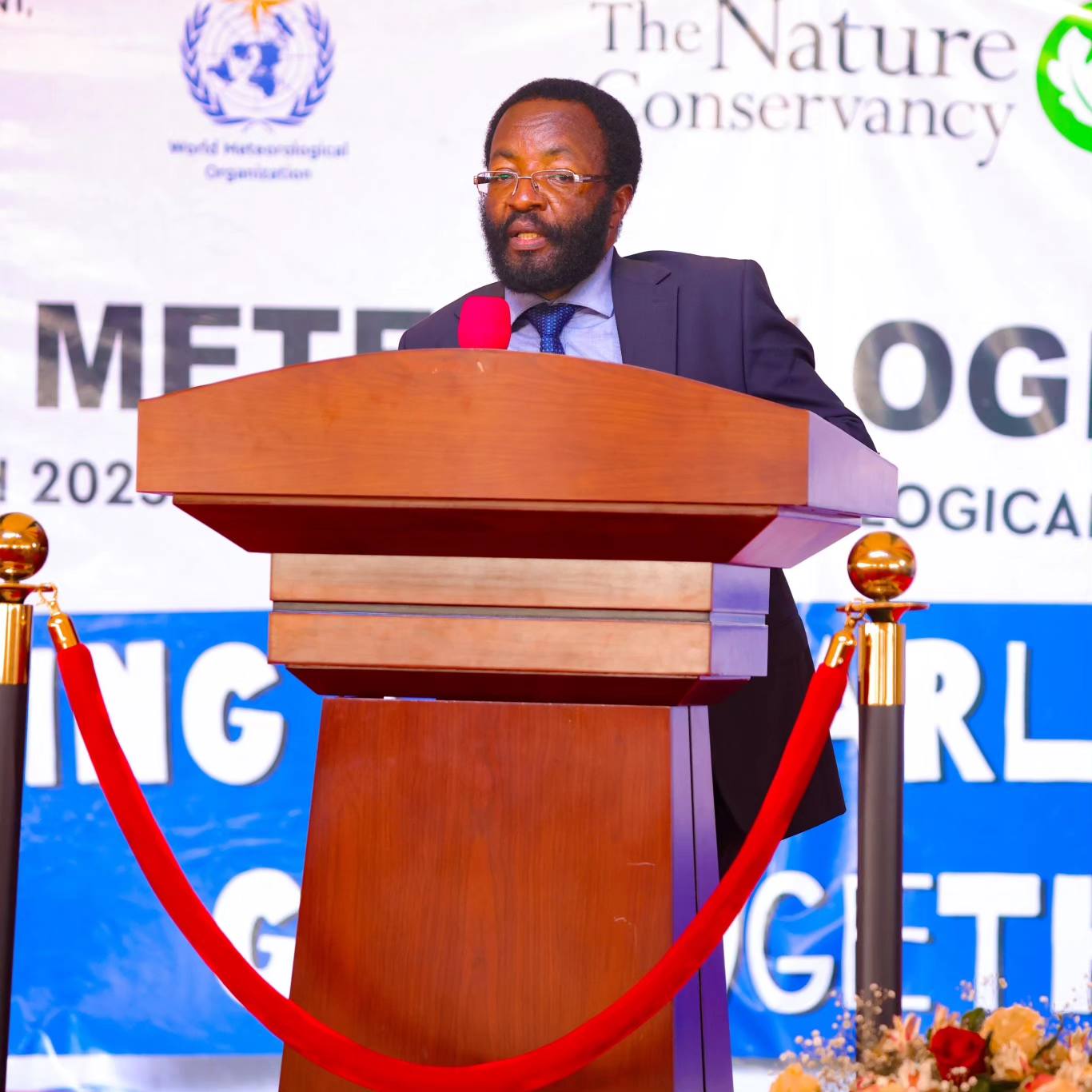
On March 23, Kenya joined the global community in marking this year’s World Meteorological Day at Makindu Meteorological Station, Makueni County.
The theme of the day is "Closing the Early Warning Gap Together".
The theme signifies the urgent need for global collaboration to ensure everyone is protected from extreme weather events through effective, accessible, and timely early warning systems.
Kenya meteorological department director Dr David Gikungu says the NFCS seeks to create an effective coordination mechanism for climate services.
The NFC will improve access or provision of climate services and Early Warnings for all; enhance climate observation and monitoring networks; enhance capacity for climate services, users, providers, and researchers to interact at all levels,” Gikungu says.
Gikungu says NFC will also enhance capacity for research in climate modeling, weather forecasting, and climate prediction.
This comes even as a State of the Climate in Kenya 2024 report released last week showed that 2024 was the hottest year on record in Kenya.
The report further showed that the March to May 2024 season brought above-average rainfall, with some areas receiving 111-200 per cent of their long-term mean.
“Widespread flooding affected over 100,000 households, causing more than KSh 400 million in damages across coastal regions. Crop losses, infrastructure destruction, and livestock deaths further worsened food insecurity and economic losses,” part of the report says.
The report shows that the poor short rains led to a sharp increase in food insecurity, rising from 1 million people in July 2024 to 2.15 million by February 2025, with 265,900 in IPC Phase 4 (Emergency) and 1.88 million in IPC Phase 3 (Crisis).
To address some of the challenges, the report states, there is need to scale up early warning systems for early actions.
The Kenya Meteorological department operates 41 synoptic observation stations, including airport and agrometeorological sites.
However, their sparse distribution falls below World Meteorological Organization (WMO) standards, highlighting the need for increased investment in maintenance and expansion.
In Kenya, projected rainfall and temperature patterns will have various socioeconomic implications.
Farmers need to prepare for potential rainfall deficits in some regions, impacting crop yields and food security.
In areas expecting above average rainfall, the risk of flooding and waterlogging should be considered.
Water availability will fluctuate depending on the rainfall distribution, influencing water supply for domestic, agricultural, and industrial use.
Warmer-than-average temperatures could exacerbate heat-related illnesses, while regions experiencing higher rainfall might see increased vector-borne diseases such as malaria and dengue.
Flood-prone areas should anticipate possible disruptions to transport and infrastructure, necessitating proactive disaster risk management strategies.