
By Judith Akolo
The atmosphere is confusingly amazing, because systems develop and decay on their own, and as they do so, the meteorologist has to collect the data and forecast what is expected to happen. This is scenario evolves driven by the Sea Surface Temperatures (SSTs).
The weather is characterised by fluctuating state of the atmosphere around us, driven by elements like temperature, wind, precipitation and clouds, this often are results of rapidly developing and decaying systems such as low pressure and high pressure systems.
When the Kenya Meteorological Department released the forecast for the October, November to December (OND) short rains season indicating that the season would be driven by weak La Nina conditions, the public sic clicked, drought.
When the statement mentioned that the weak La Nina conditions were likely to develop during September to November and persist into early 2025 it was clear that it was going to be a worrying season. A season of depressed rainfall.
To cap it all there was mention of a neutral Indian Ocean Dipole (IOD), this is another weather system that contributes to enhanced rainfall or lack of it in the country. The Weatherman further spoke about the rainfall distribution which was expected to be poor over most parts of the country with prolonged dry spells, and there was a rider that indeed there would be isolated storms.
The public has always been aware of El Nino Southern Oscillation (ENSO) that is the El Nino mostly associated with heavy rainfall depending on its strength and his sister La Nina associated with depressed rainfall again depending on the strength. However, while this is the case, there are two other systems that determine whether we might have enhanced rainfall, depressed rainfall or lack of it.
The first one is the Indian Ocean Dipole (IOD), this is an irregular oscillation or variation of Sea Surface Temperatures (SSTs) between the Eastern and Western parts of the Indian Ocean. During a positive IOD Warmer Sea Surface Temperatures are observed in Western Indian Ocean, that is along the East African coastline, this then results in wet conditions over East Africa.
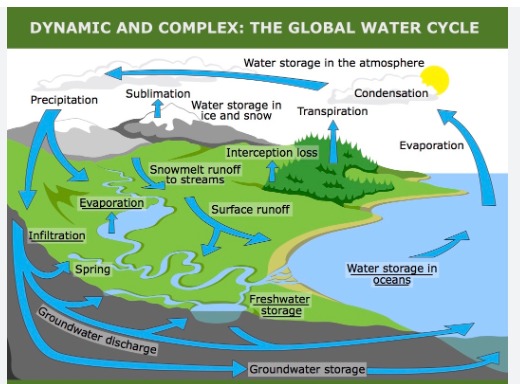
This is because a positive IOD leads to enhanced evaporation rate with more water vapour escaping into the atmosphere leading to the formation of clouds hence the high amount or rainfall that tends to be experienced in the eastern Africa region. When this is happening to the Western Indian Ocean, the opposite takes place in the Eastern Indian Ocean, that is the areas around Indonesia and Australia. These areas end up experiencing dry conditions due to cool sea surface temperatures. The stable atmosphere inhibits or prevents the escape of water vapour into the atmosphere.
When the opposite happens when there is a negative Indian Ocean Dipole, the areas around the Eastern Africa region receive depressed rainfall because again, this is due to cool sea surface temperatures. The opposite happens in Eastern Indian Ocean region around Indonesia and Australia which end up experiencing enhanced rainfall.
The second system that is worth of noting, is the Madden-Julian Oscillation (MJO) which is a lesser-known phenomenon, but can have dramatic impacts during a given season. The Madden-Julian Oscillation is characterised by an eastward spread of large regions of enhanced and suppressed tropical rainfall, mainly observed over the Indian and Pacific Ocean.
An area of enhanced tropical rainfall is first appearing in the western Indian Oceans, which spreads eastwards into the warm waters of the tropical Pacific. This pattern of tropical rainfall tends to lose its identity as it moves over the cooler waters of the eastern Pacific, before reappearing at some point over the Indian Ocean again. This lasts approximately 30 to 60 days with eight phases.
The December 2024 monthly forecast released by the Kenya Meteorological Department, indicates that; based on the prevailing and expected Sea Surface Temperature Anomalies (SSTAs) over the Pacific, Indian Ocean and Atlantic Ocean, the El Niño–Southern Oscillation (ENSO) is currently neutral, with SSTs being near average in the central and
eastern Pacific Ocean; La Niña that typically brings drier-than-normal conditions to parts of East Africa is weak. The Indian Ocean Dipole (IOD) which had been in a negative phase since mid-October is returning to neutral conditions in December.
Owing to the neutral phase of most of the determinants of the weather systems in the country, the Weatherman attributed the heavy storms and rains that were experienced in November to the Madden-Julian Oscillation (MJO) which was active over the Indian Ocean, and led to enhanced rainfall in parts of the country in November. This system has moved into the maritime continent and since it usually has eight phases in 30 to 60 days, anything could happen as the October, November to December short rains season ends.
This explanation shows that not one system or phenomenon can explain or determine a given season, and while most may blame the Weatherman for a “a wrong prediction” it is the systems that evolve and decay. While La Nina had been predicted, Madden-Julian Oscillation happened within the season resulting in heavy storms.
The only hope is that the enhanced amounts of rainfall experienced during November was harvested into dams, water pans and storage tanks and that it will provide relief into the new year.