
By Samwel Doe Ouma
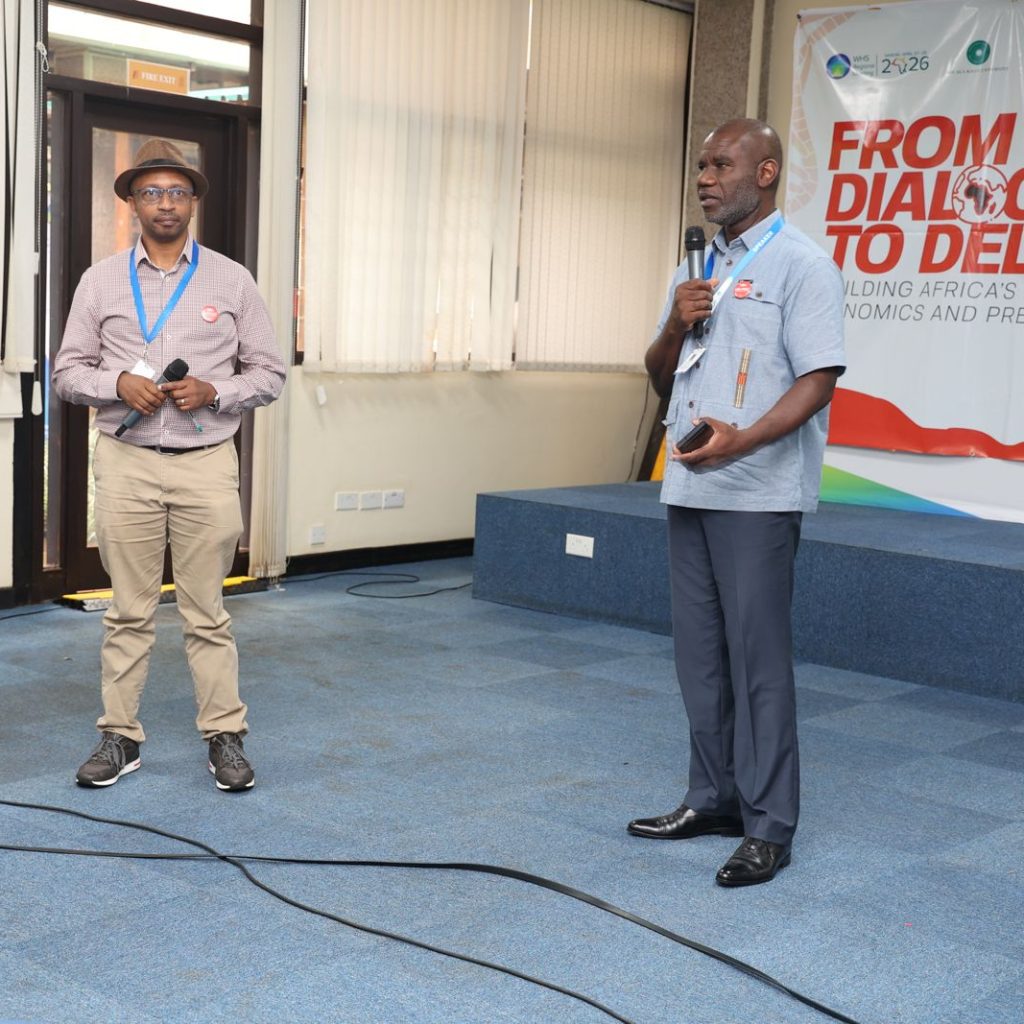
On the left with the hat, Dr. Robert Karanja, Founder and Executive Director, Biolinx Africa; Left is Prof. David Tea Okou, Clinical Molecular Geneticist and Founder, YTO Foundation (Cote D’Ivoire)
Africa’s push to build its own precision medicine industry has gained momentum after Biolinx Africa, YTO Foundation and Nextgen Molecular Lab unveiled a $3.5 million genomics partnership aimed at expanding DNA sequencing capacity in Kenya and Côte d’Ivoire.
The investment, announced at the World Health Summit Regional Meeting in Nairobi, includes the acquisition of a NovaSeq X Plus platform designed for large-scale genome analysis.
Biolinx Africa, YTO Foundation and Nextgen Molecular Lab said the South-South partnership is backed by financing from Equity Bank Kenya and is intended to strengthen African-led scientific innovation.
The partners said the initiative will begin in Kenya and Côte d’Ivoire before expanding across the continent as infrastructure and collaborations grow.
The announcement was made during a high-level roundtable on the sidelines of the World Health Summit in Nairobi, where scientists, regulators, investors and global health leaders discussed barriers slowing the growth of genomics in Africa.
Experts say the investment comes at a critical time.
Africa has the world’s greatest human genetic diversity, yet African populations remain significantly underrepresented in global genomic studies and reference databases, according to Prof. David Tea Okou, a clinical molecular geneticist and founder of YTO Foundation.
“African populations remain underrepresented in the genomic landscape that increasingly shapes prevention, diagnosis, treatment and research priorities,” Okou said. “This partnership is about building local capacity and generating data that are more relevant to African patients.”
Researchers say that gap can lead to missed diagnoses, misinterpreted test results and treatments that may be less effective for African patients.
“Genomics in Africa has to move from conversation to capability,” said Dr. Robert Karanja, founder and executive director of Biolinx Africa. “This partnership is about putting infrastructure, investment and African scientific leadership behind a practical delivery agenda.”
Precision medicine uses genetic, environmental and lifestyle information to tailor prevention, diagnosis and treatment to individual patients. It is increasingly important in cancer care, rare disease diagnosis and helping doctors choose medicines most likely to work for specific patients.
The first phase of the project will focus on building sequencing capacity, supporting African-led genomic data generation and analysis, and implementing a 24-month roadmap centered on Kenya and Côte d’Ivoire.
The NovaSeq X Plus platform, produced by Illumina, is designed for high-volume sequencing and could help expand local testing and research instead of relying on laboratories outside the continent.
Dr. George Michuki, chief executive officer of Nextgen Molecular Lab, said genomics is already helping explain why patients respond differently to treatment.
“We are seeing how pharmacogenomics can support more personalized cancer care,” Michuki said, referring to the study of how genes influence responses to medicines.
African governments and institutions have also shown growing interest in genomics.
AUDA-NEPAD has identified genomics as one of Africa’s scientific priorities, while Africa CDC says six countries have launched national genomics strategies and 11 more have finalized plans awaiting rollout.
In February, the World Health Organization Executive Board adopted a resolution calling for greater investment in precision medicine, including genomics, laboratory systems, databases and bioinformatics.
The partnership also highlights growing African scientific networks. Karanja and Okou are members of African Voices of Science, an initiative launched by Speak Up Africa in 2020 to amplify African researchers and health experts.
Organizers said the new alliance demonstrates how African-led collaborations can move advanced health technologies from policy discussions into practical use, while positioning the continent to play a larger role in the future of global medicine.