
By Kennedy Gakuha
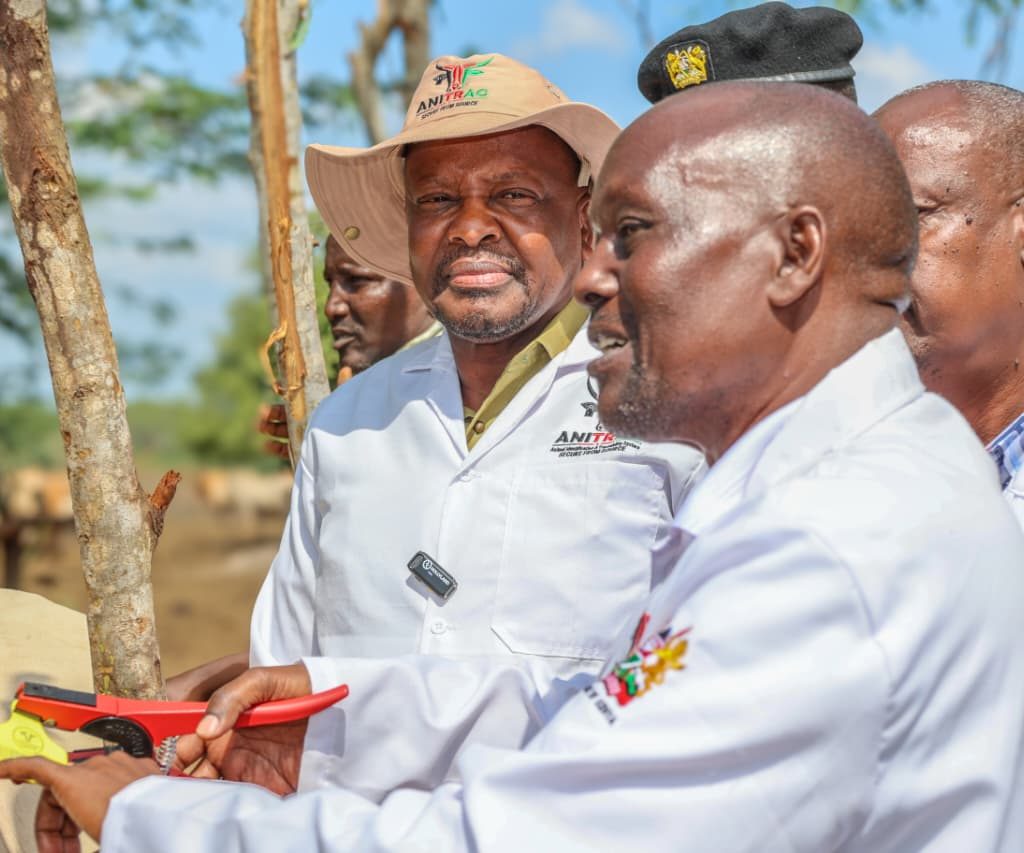
The government has accelerated the nationwide rollout of the Animal Identification and Traceability (ANITRAC) system, a digital platform designed to give every registered animal a unique identity and enable authorities to trace livestock from farm to market.
Speaking during a livestock sensitization and animal tagging exercise in Kurawa, Tana River County, Agriculture Cabinet Secretary Mutahi Kagwe said the initiative marks a major shift toward modernizing Kenya's livestock industry and positioning it to compete in international markets.
"ANITRAC is not merely a livestock tagging exercise," Kagwe said. "It is the foundation of a modern livestock economy."
He said global meat markets increasingly require countries to demonstrate the origin, movement history and health status of animals before meat and livestock products can access premium export destinations.
"Today's international meat trade is increasingly driven by traceability, with buyers demanding proof of an animal's origin, movement history and health status before products can access premium export markets," he said.
The government is urging livestock farmers to participate fully in the registration exercise, saying Kenya's ability to access lucrative markets in Europe, the Middle East and other regions will depend on establishing a credible animal identification and traceability system that meets international standards.
Kenya has an estimated 77 million livestock, making the sector one of the country's most important economic pillars. According to Kagwe, livestock contributes about 12percent of Kenya's Gross Domestic Product (GDP) and nearly 40percent of agricultural GDP, while supporting millions of livelihoods, particularly in the arid and semi-arid lands (ASALs).
Beyond expanding export opportunities, the ANITRAC system is expected to strengthen disease surveillance and outbreak response, reduce livestock theft, improve food safety and enhance consumer confidence in Kenyan livestock products.
Officials say the system will also improve the country's ability to respond to transboundary animal diseases by enabling faster identification and tracking of affected animals.
Kagwe said the government is complementing the traceability programme with investments in value addition, including the establishment of Kenya Leather Industrial Parks to promote local processing of hides and skins instead of exporting raw materials.
By linking traceability with domestic processing and manufacturing, he said, Kenya hopes to create more jobs, strengthen local industries and ensure livestock generates greater returns for farmers.
"Our vision is to transform livestock from a traditional livelihood into a modern commercial enterprise that creates wealth, drives industrialization and positions Kenya as a trusted supplier of safe, traceable and high-quality livestock products," Kagwe said.
The nationwide rollout follows the programme's national launch in Nyeri last week and will continue across all counties as the government accelerates livestock registration and strengthens animal health systems.
The Tana River exercise was attended by Tana River Senator Danson Mungatana and officials from the Directorate of Veterinary Services, who joined Kagwe in engaging farmers on the role the ANITRAC system is expected to play in transforming Kenya's livestock sector into a globally competitive industry.
Officials say the programme is expected to improve farmers' incomes by opening access to higher-value export markets while strengthening Kenya's livestock value chain from production to processing and trade.