
By Samwel Doe Ouma
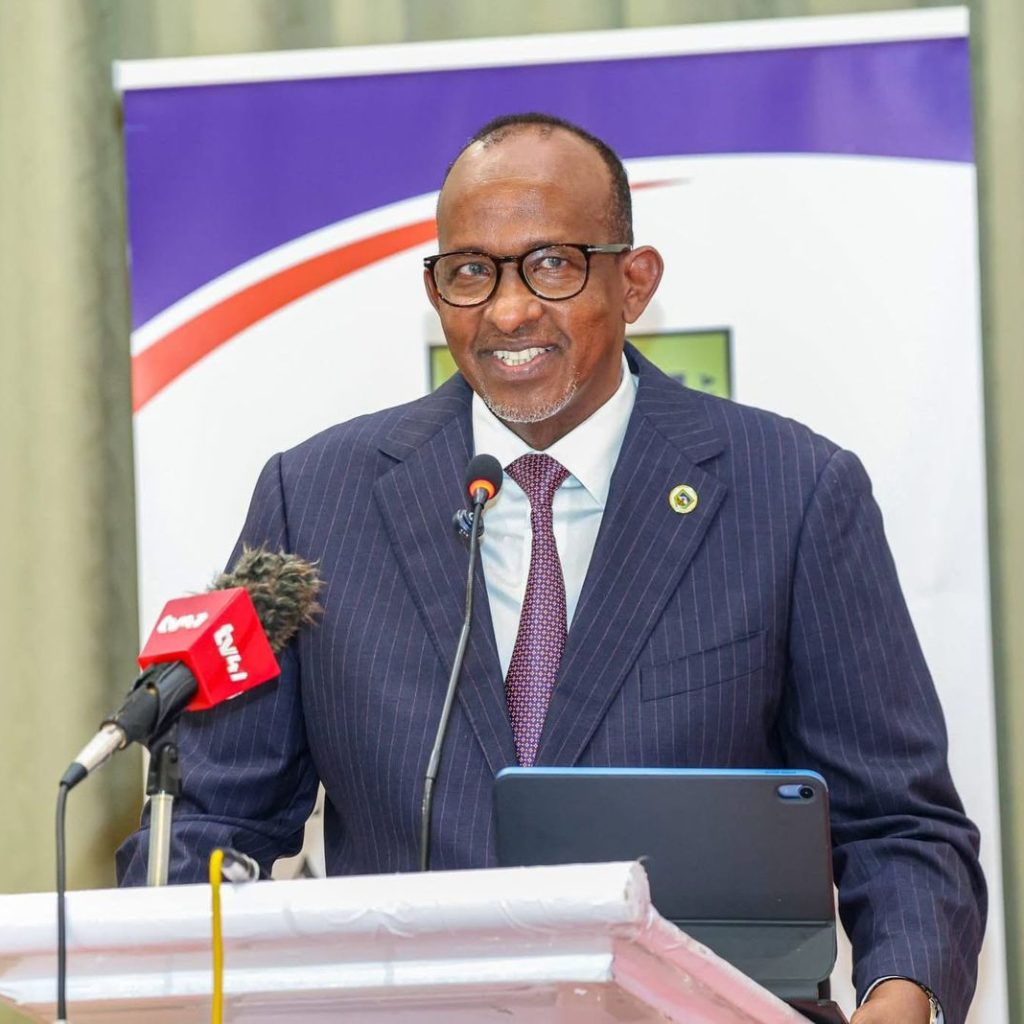
Health CS Aden Duale
Cabinet Secretary for Health Aden Duale has urged Kenya’s medical Association Members to move “beyond resilience” and partner with government as sweeping health-sector reforms roll out under the Bottom-Up Economic Transformation Agenda (BETA).
Speaking at the 53rd Kenya Medical Association (KMA) Annual Scientific Conference in Mombasa, Duale emphasized collaboration over confrontation. “You are co-architects of this transformation,” he told KMA members. “Your association is not merely a stakeholder; it is the conscience of our healthcare system.”
Four pillars, he said, guide the overhaul: sustainable financing; integrated health information systems; efficient management of health products and technologies; and a strengthened health workforce.
Duale defended replacing the National Hospital Insurance Fund (NHIF) with the Social Health Authority (SHA), calling early progress “monumental.” By mid-April, SHA had registered 30.4 million Kenyans, collected KES 169.19 billion, and disbursed KES 124.53 billion to cover care. He said 8.58 million Kenyans now access free primary healthcare, and 3.64 million have received specialized treatment through the Social Health Insurance Fund (SHIF).
Acknowledging friction with practitioners over delayed reimbursements, slow claims processing, and inherited NHIF debts, Duale said these issues are being treated with urgency.
"The government is accelerating payments and improving verification systems to clear backlogs."
Digital transformation, anchored in the new Digital Health Agency, is central to the reforms. Duale said 10,646 facilities have been digitally linked and 4,149 public facilities now operate under the “Taifa Care” system. Over 30,000 digital devices have been distributed, and an AI-driven fraud detection engine flags suspicious claims for review.
Duale highlighted the Practice 360 app, which will allow clinicians to manage claims in real time from their workstations. Geo-fenced to prevent misuse, the app is designed to reduce fraud and improve workflow. He acknowledged the frustrations that come with new technology and urged clinicians to provide technical feedback so systems become “empowering rather than burdensome.”
To address overlapping regulation, The CS pledged to harmonize county levies and licenses through consultation with the Council of Governors. He also announced reforms at the Kenya Medical Supplies Authority (KEMSA) to improve transparency and reduce stock-outs via end-to-end tracking.
A KES 6.18 billion National Equipment Support Project (NESP) will install CT scanners and digital X-rays nationwide, replacing the controversial Managed Equipment Services (MES) model with a more consultative approach.
Recognizing that reforms cannot succeed without a supported workforce, Duale said: “We cannot build a resilient health system on the backs of a frustrated workforce.” He announced plans for public participation in drafting a Health Care Workers Policy to define rights, norms and protections, including standards for posting and compensation of medical interns. He also invited KMA to join a Multi-Sectoral Technical Working Group to align medical education with emerging needs such as digital healthcare delivery and universal health coverage.
Looking ahead, the ministry is developing new legislation, including a Quality of Care and Patient Safety Bill, and reviewing existing laws to embed reforms in a stronger legal framework.
CS Duale acknowledged that restructuring financial and operational systems has been disruptive but appealed for shared ownership. “To ensure these reforms outlive us, we must move beyond traditional advocacy into active co-leadership,” he said, urging stakeholders to make quality healthcare a guaranteed right for every Kenyan as he officially opened the conference.