
By Judith Akolo
Climate scientists in the Greater Horn of Africa have forecast wetter-than-normal conditions in the region during the long rains season of March, April to May.
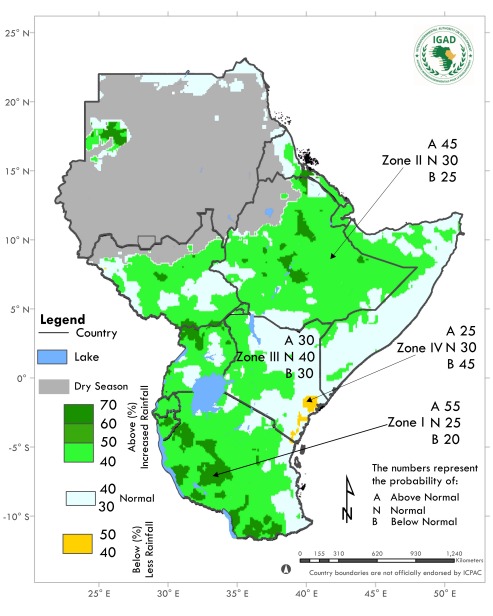
The IGAD Climate Prediction and Applications Centre (ICPAC) in collaboration with National Meteorological and Hydrological Services (NMHSs) in member states, the outlook indicates a 45% probability of wetter-than-normal rainfall conditions over much of the Greater Horn of Africa, including most parts of Uganda, Rwanda, Burundi, Tanzania, central to western Kenya, Ethiopia, South Sudan, northern Somalia, and Djibouti.
The forecast released during the 72nd Greater Horn of Africa Climate Outlook Forum (GHACOF 72) held in Nairobi shows a 40% probability of near-normal rainfall over western and eastern South Sudan, north-eastern and south-western Kenya, most parts of Somalia, coastal Tanzania, and isolated areas of Uganda and Ethiopia.
The forecast read by the Director of Meteorological Service Edward Muriuki who is also the Kenya’s Permanent Representative to the World Meteorological Organisation (WMO) indicates that, drier-than-normal conditions are expected over coastal parts of Kenya.
The scientists have also forecast the indicates an onset expected over most parts of the region, “while delayed onset is forecast over localised areas of Ethiopia, South Sudan, and Somalia,” says the statement, and adds, “Dry spells may still occur in areas forecasted to receive near-normal or above-normal rainfall, and wet spells may occur in areas forecasted to receive near-normal or below-normal rainfall.”
They are warning that warmer-than-average temperatures are expected over most parts of the Greater Horn of Africa, “with higher probabilities over Sudan, Djibouti, Tanzania, and parts of Ethiopia, Somalia, and Kenya,” says the statement and adds, “cooler-than-average conditions are expected over parts of central to northern Ethiopia.”
In his closing remarks the Dr Abdi Fidar, Director of ICPAC, stated: “GHACOF remains a critical regional platform for building consensus on climate risks and translating seasonal forecasts into early action that protects lives, livelihoods, and development across the Greater Horn of Africa.”