
By Samwel Doe Ouma
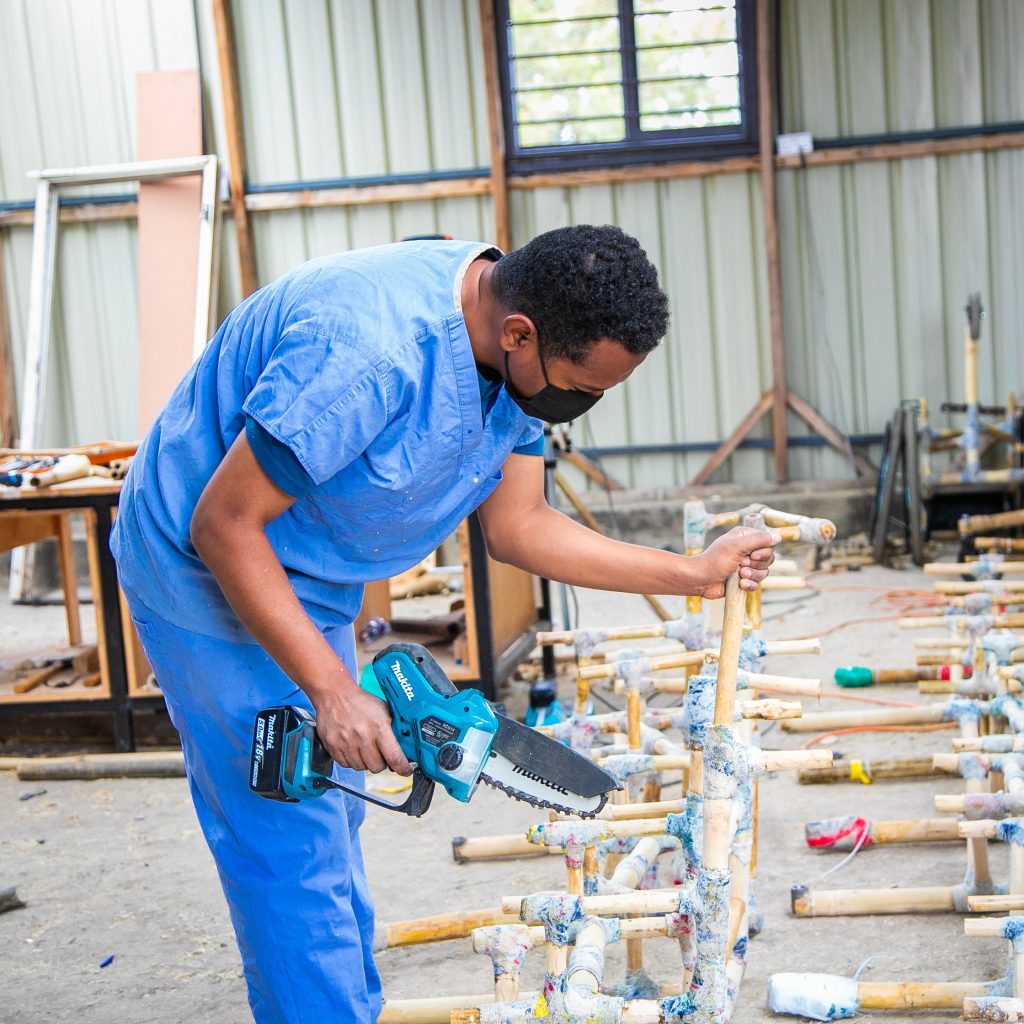
Eng Abel Hailegiorgis at Bamboo Wheel Chair Assembly Workshop in Kijabe
Inside a small workshop in the lush hills of Kijabe, the sound of sanding fills the air as engineers, therapists and student volunteers carefully shape bamboo poles into curved frames.
Bound together with fibre and resin, the pieces slowly take form not as furniture or bicycles, but as wheelchairs designed to help children with disabilities move through the world with greater independence.
The wheelchairs are made almost entirely from bamboo, a fast-growing plant widely available across Kenya.
The project, led by BethanyKids with technical training support from Bamboo Labs of Ethiopia,African Angel Alliance (AAA) and volunteers from the Kenyatta University engineering department, aims to tackle one of the country’s most persistent health access challenges: the shortage of affordable wheelchairs for children.
BethanyKids, in collaboration with African Angel Alliance (AAA), is working to expand mobility support for children with disabilities by assembling and providing customized wheelchairs tailored to their needs. Through the partnership, AAA offer small grants to help cover the cost of the wheelchairs, enabling more children to access essential mobility aids.
The funding and Technical Support to the development of the Bamboo wheelchair has also been provided by the African Angel Alliance, a US based NGO. This technical assistance has been engineering development and assistance from Calvin University senior engineering students with leadership from Leroy Johnson, an expert designer in the US based office furniture seating industry. This assistance has ensured consistent production of each wheelchair using fixture jigs for each unit produced.
“We are fabricating bamboo wheelchairs specifically for children,” said Joseph Kompe, an assistive technology specialist at BethanyKids. “There is a very high demand for pediatrics wheelchairs in our country, and bamboo wheelchairs are proving to be one of the solutions.”
During a recent two-and-a-half-week training led by Ethiopian engineer Abel Hailegiorgis, the team produced about 40 bamboo wheelchair frames.
Once fitted with wheels, cushions and other components, the devices will be provided to children who need them most.
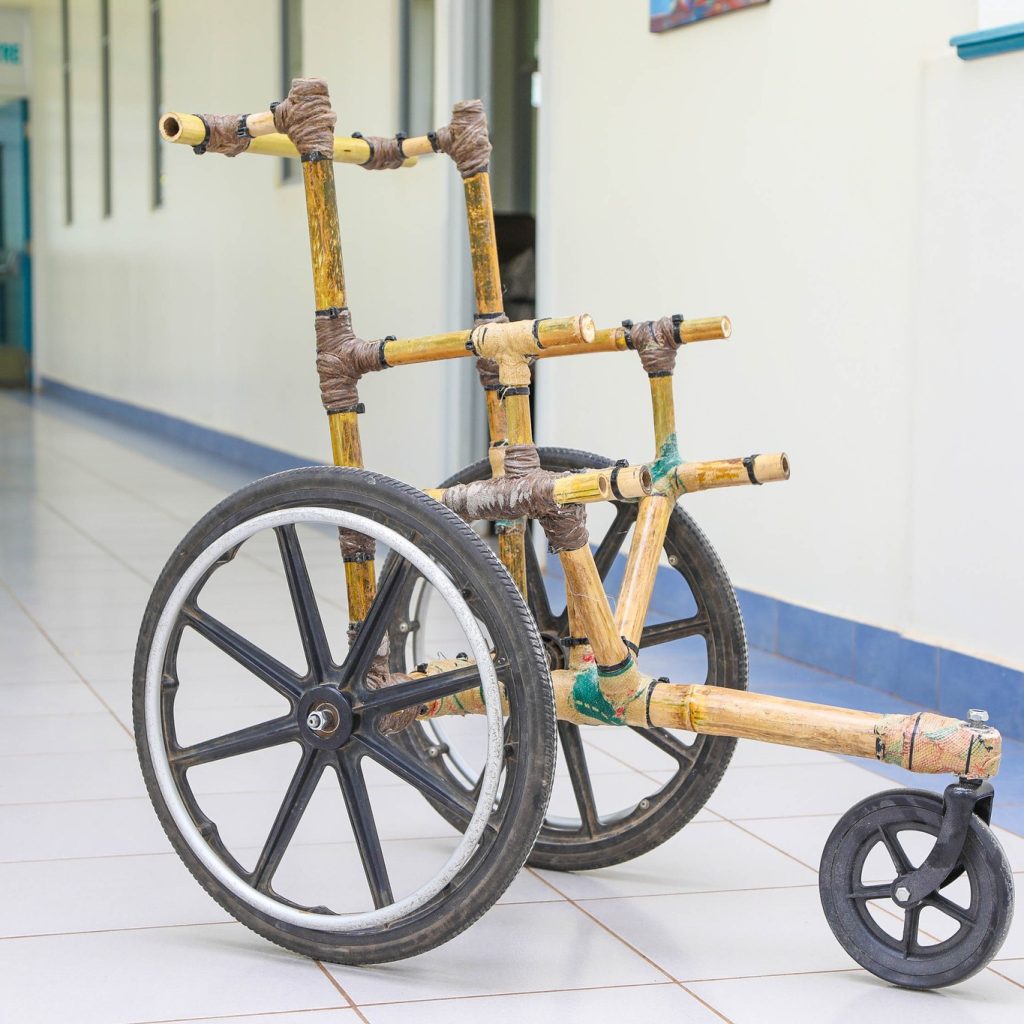
Bamboo Wheel Chair Prototype
A widespread mobility gap
Across Africa, access to assistive technology remains severely limited. Experts estimate that only about 15percent to 25percent of people who need assistive devices receive them, and an even smaller share between 5percent and 35 percent obtain mobility aids such as wheelchairs.
In Kenya alone, demand for wheelchairs is estimated at between 100,000 and 200,000 annually far exceeding current supply.
According to David Nganga, country director for BethanyKids Kenya, many organisations struggle to meet demand because most wheelchairs must be imported.
Imported devices typically cost between $400 and $1,000 before shipping and other charges. Although wheelchairs are tax-exempt, additional import fees including the Import Declaration Fee and Railway Development Levy can significantly increase costs.
“The bamboo wheelchair project aims to reduce these barriers by using locally available materials and expanding domestic manufacturing capacity in Kenya,” Nganga said.
Turning bamboo into mobility
Bamboo’s unique properties make it well suited for assistive devices. The plant matures within three to five years, grows widely across East Africa and is increasingly used in construction because of its strength and sustainability.
Hailegiorgis, founder and CEO of Bamboo Labs, said bamboo’s durability rivals many conventional materials.
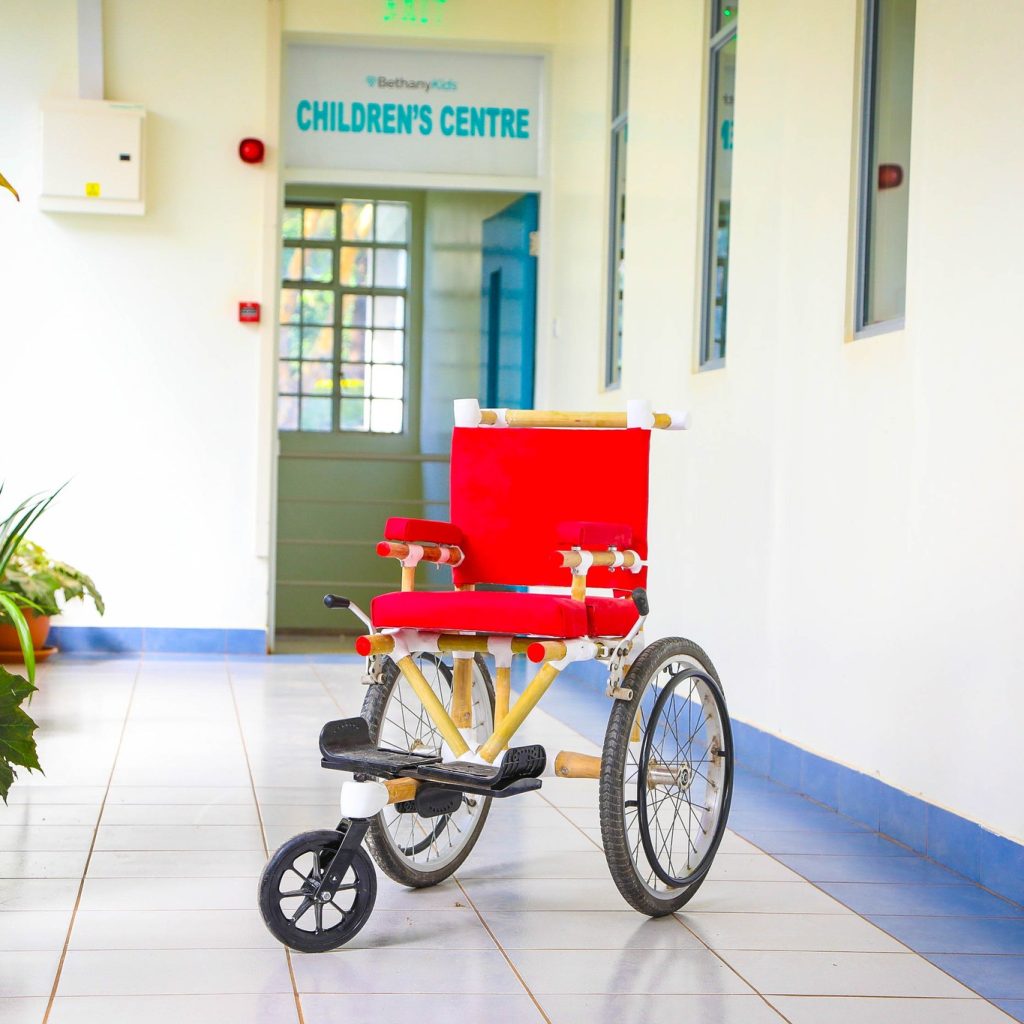
Fully fitted Bamboo Wheel Chair Prototype assembled at BethanyKids
“Bamboo is very strong, lightweight and locally available,” he said. “In some cases, its tensile strength can even be stronger than steel.”
The technology used to produce bamboo wheelchairs is adapted from techniques used to build bamboo bicycles, which have gained popularity in parts of Africa and Europe.
Frames are constructed using relatively simple workshop tools, including cutting machines, drill bits, fibre reinforcement and industrial adhesives.
“It is actually easier than working with metallic wheelchairs,” Kompe said. “You mainly need the right bamboo pieces, cutting tools and binding materials.”
Most materials used in production including bamboo, fibre and adhesives are sourced locally to reduce supply delays and costs. Wheels are supplied by the Association for the Physically Disabled of Kenya.
Designed for real-life conditions
The designers say the wheelchairs must withstand the everyday realities many children face.
Many live in rural areas where paved roads are rare and rough terrain is common.
“Our users often live in places where roads are rocky or sandy,” Kompe said. “So the wheelchair has to navigate rough paths as well as household environments.”
Some models use a three-wheel configuration to improve stability and manoeuvrability on uneven ground.
Fitted to each child
Before receiving a wheelchair, each child undergoes a clinical assessment by physiotherapists, occupational therapists and wheelchair specialists.
The process follows guidance from the World Health Organization on wheelchair service provision, which includes assessment, prescription, fitting, user training and follow-up.
“The wheelchair must fit the user properly,” Nganga said. “If a child’s hip width is 12 inches, the seat cannot be wider than that because it would affect posture.”
BethanyKids primarily supports children living with spina bifida and hydrocephalus. Through mobile outreach clinics across Kenya, the organisation also assists children with neurodevelopmental disabilities who require specialised mobility devices.
Life beyond the wheelchair
For many families, receiving a wheelchair can dramatically change daily life.
Children who previously depended on caregivers to carry them can travel to school, play with friends and participate in community activities.
“The biggest benefit is independence,” Hailegiorgis said. “Children can go to school and parents can go to work instead of constantly carrying them.”
He added that the project could also create economic opportunities along the supply chain. Bamboo farmers and local communities can supply raw materials, technicians assemble the devices, and caregivers often mothers of children with disabilities can produce cushions and other wheelchair components from home.
A sustainable cycle
Because children grow quickly, the wheelchairs are designed to be reused.
When a child outgrows a wheelchair, it can be returned, repaired and provided to another child.
“With proper maintenance, a wheelchair can last up to five years,” Kompe said.
BethanyKids also conducts routine follow-ups with families to monitor components such as cushions, seat belts and bearings.
Looking ahead
The bamboo wheelchair project remains in its pilot phase. Developers plan to submit the devices for testing and certification through the Kenya Bureau of Standards.
If successful, the initiative could expand into local manufacturing hubs and reduce Kenya’s reliance on imported mobility devices.
“Our long-term vision is to establish a wheelchair assembly plant in Kijabe,” Nganga said. “But first we needed to prove that we can produce a wheelchair locally.”
For now, the bamboo frames taking shape inside the small workshop represent more than a technological experiment.
They offer the promise that thousands of children across Kenya may soon gain the freedom to move, learn and participate in their communities on their own terms.