
By Koech Gilbert
Experts have sounded an alarm over the rate at which mountain glaciers are dwindling, warning that it will unleash an avalanche of cascading impacts.
In Kenya and Tanzania, over two million people depend on water from Mount Kilimanjaro, some of it still stored in the mountain’s dwindling glaciers.
A similar number depend on the Mount Kenya ecosystem for water, with water levels on the Ngare Ngare river falling 30 per cent in the last ten years as the mountain’s glaciers shrink.
The falling water levels are leading to more conflict as herders and farmers struggle to survive.
The State of the Climate 2024 report from World Meteorological Organization (WMO) shows that in the last three years there has been the largest global loss of glacial ice on record.
The WMO report shows that five of the past six years have witnessed the most rapid glacier retreat on record.
Already, World Meteorological Organization (WMO) and the World Glacier Monitoring Service (WGMS) says that between 2022- 2024, there was largest loss of glacier mass on record.
“WMO’s State of the Global Climate 2024 report confirmed that from 2022-2024, we saw the largest three-year loss of glaciers on record. Seven of the ten most negative mass balance years have occurred since 2016,” said WMO Secretary-General Celeste Saulo.
“Preservation of glaciers is a not just an environmental, economic and societal necessity. It’s a matter of survival,” she said.
Based on a compilation of worldwide observations, the World Glacier Monitoring Service estimates that have lost a total of more than 9,000 billion tons since records began in 1975.
“This is equivalent to a huge ice block of the size of Germany with a thickness of 25 meters, says Prof. Dr. Michael Zemp, the Director of the WGMS.
The 2024 hydrological year marked the third year in a row in which all 19 glacier regions experienced a net mass loss.
Glacier mass loss was 450 billion tons in the 2024 hydrological year – the fourth most negative year on record.
More than 275,000 glaciers worldwide cover approximately 700,000 km². Together with ice sheets, glaciers store about 70% of the global freshwater resources.
High mountain regions are the world’s water towers.
Depletion of glaciers therefore threatens supplies to hundreds of millions of people who live downstream and depend on the release of water stored over past winters during the hottest and driest parts of the year.
In the short-term, glacier melt increases natural hazards like floods.
The United Nations General Assembly proclaimed 2025 as the International Year of Glaciers’ Preservation and established 21 March as the annual World Day for Glaciers.
It seeks to increase awareness of the vital role that glaciers, snow, and ice play in the climate system and hydrological cycle, and their importance to local, national, and global economies.
UNESCO and WMO are spearheading activities and coordinating international efforts supported by over 200 contributing organizations and 35 countries.
On average in the tropics, glaciers shrunk 20 per cent between 2000 and 2023 - but the situation in East Africa is far worse.
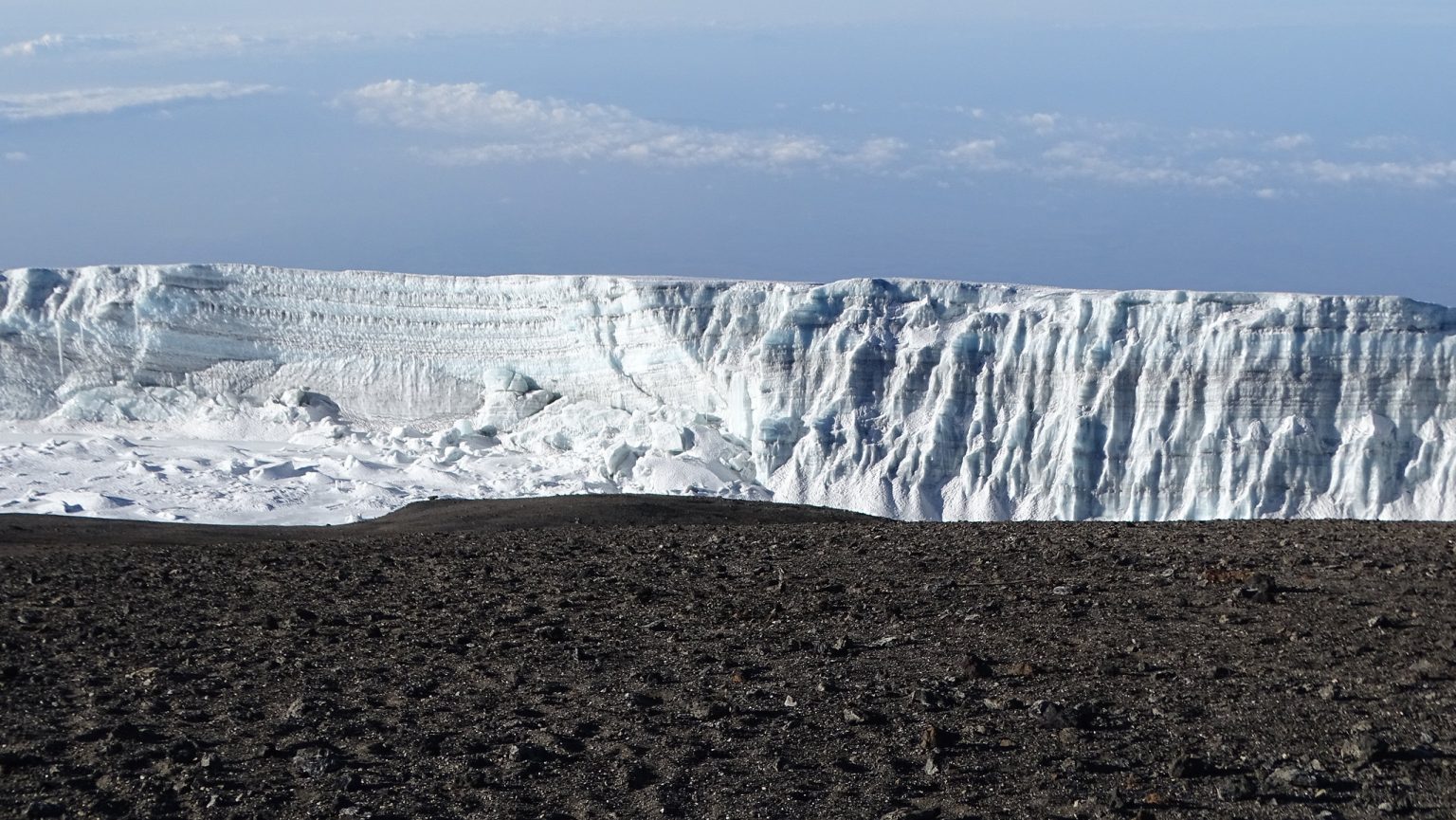
Mount Kilimanjaro has the largest area of glaciers remaining in East Africa at just under one kilometer square.
But compared to 1900, Mount Kilimanjaro has lost more than 90 per cent of its original glacial area.
Mount Kenya, has the smallest remaining amount of glacier area in East Africa at just 0.069 kilometer square- a 95 per cent loss of area since 1900.
The mountain’s glaciers have more than halved since just 2016.
The Nothey and Darwin glaciers on Mount Kenya have already disappeared and the Lewis Glacier - which split in two between 2014 and 2016 - has shrunk 62 per cent in just five years.
Mount Kilimanjaro’s glaciers are nearly 12,000 years old, but they will disappear within our lifetimes.
Scientists predict that the remaining glaciers on Mount Kilimanjaro are likely to disappear by 2040 and on Mount Kenya by 2030- making them among the first mountain ranges worldwide to lose all their glaciers due to climate change.
The melting of the ice on Mount Kilimanjaro and Mount Kenya is already hurting local communities, and it will only get worse.
Studies have found out that 66 per cent of people along the Naromoru river agreed that the melting of Mount Kenya’s glaciers had reduced the river flow downstream.
Older people were most likely to have seen these changes.
Water from glaciers and snowfall contribute greatly to the river.
As it takes about 50 years for groundwater to emerge at the foot of Mount Kenya, after entering the rock at the glacial area, we may not yet have seen the full effects of the deglaciation.