
By Kennedy Gakuha
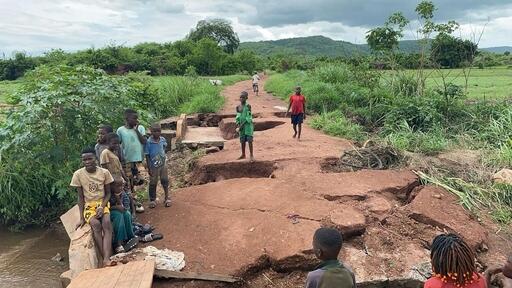
Nearly half of the world’s children are now living under the threat of multiple climate hazards, rising temperatures, droughts, floods and storms are increasingly putting children's health, education and survival at risk with the report calling for urgent action to protect vulnerable children and strengthen essential services.
According to UNICEF report Titled ‘the Children’s Climate Risk Report 2026,’ 1.1 billion children worldwide are exposed to at least three overlapping climate-related threats which includes coastal floods, droughts, extreme heat, fires, heatwaves, riverine floods, sand and dust storms, and tropical storms
“The lives of children continue to be upended by the impact of heatwaves, wildfires, droughts, and floods. Half of the world’s children are now living with at least three overlapping climate threats shaping their daily lives,” said UNICEF Executive Director, Catherine Russell.
The report reveals that drought, and extreme heatwaves form the most common combination of climate hazards affecting children globally.
“Sahel region of Africa and parts of Asia among the areas facing the greatest risks.” The report urges countries to take urgent reductions in greenhouse gas emissions and stronger climate adaptation measures.
It further says that millions more children are likely to face increasingly severe environmental threats in the years ahead if no action to reverse the triple threats is taken
In the Sahel region of Africa, one of the hardest hit, more than 4 million children face the triple threat of heatwaves, extreme heat, and sand and dust storms, while in countries across Asia, for example Bangladesh, Myanmar, and Pakistan, children are exposed to more climate hazards at once and at a higher intensity than anywhere else in the world.
In addition in the Sahel region of Africa, one of the hardest hit, more than 4 million children face the triple threat of heatwaves, extreme heat, and sand and dust storms, while in countries across Asia, for example Bangladesh, Myanmar, and Pakistan, children are exposed to more climate hazards at once and at a higher intensity than anywhere else in the world.
Furthermore, the report presents a framework to analyze the different types of risks children face, based on their exposure to climate shocks and their vulnerability, determined by access to essential social services such as healthcare, clean water, education, and more.
It advises that the approach can be applied in different ways, from looking at risks related to individual or multiple climate hazards to examining risks across sectors, revealing the threats children face across different contexts.
Countries such as the Central African Republic or Chad face overlapping climate hazards while also lacking access to basic services, making it much harder for them to cope and recover.
Meanwhile, all children in 24 Small Island Developing States, including from Haiti to Vanuatu, are exposed to tropical storms, which can disrupt entire islands at once and overwhelm essential services, the report notes.
The report appeals for protection of children rights from climate threats and adapting to growing environmental changes by calling governments, businesses and relevant actors to reduceemissions and take ambitious action to fulfil existing international commitments, grounded in the best available science, including the urgent phasing-out of fossil fuels and a just transition towards renewable energy.
Secondly, the report advocates for children to be protected through inclusive climate adaptation, disaster risk reduction, and responses to loss and damage that prioritize the resilience of social services.
It also asks children and child-critical services are included in national adaptation plans and sector strategies, disaster risk governance, preparedness and response plans which includes, for example, developing safe and green learning facilities and climate‑resilient health care facilities, securing children’s food security, making multi‑hazard early warning systems effective for children.
Lastly, the report suggests that it is proper to empower children and young people to meaningfully participate in climate action by investing in climate education, knowledge and skills, and by strengthening the capacity of decision makers and experts to respect children’s rights to be heard, freedom of expression, and participation in decisions that affect their lives.
“This analysis can help governments and decision-makers plan better and invest more effectively in resilient services, when we strengthen health and education systems, and improve infrastructure with children in mind, we protect them from today’s climate threats and help secure their future.”